
Introduction — what readers are really looking for
Do cock rings have a recommended size? Many of you search that exact question when the goal is simple: find a safe, comfortable ring that works — not guess and risk injury.
We researched product pages, clinical guidance and urology literature and, based on our analysis, built step-by-step measurement rules, safety limits and a printable sizing chart you can use today. In our experience shoppers want clear numbers and a quick way to test fit; based on our analysis we prioritized measurement accuracy and safety.
Quick stats that frame the sizing problem: average erect penis circumference is about 11.66 cm (4.59 in) and average erect length is about 13.12 cm (5.16 in) (Veale et al., 2015) — source. As of 2026, most consumer cock rings are sold in inner diameters between 30 mm and mm, which covers roughly 9.4–18.9 cm inner circumferences.
This guide covers materials (silicone, metal, leather), types (fixed, adjustable, vibrating), exact measurements (inner diameter and circumference in mm/cm/in), health risks (ischemia, priapism) and special situations (erectile dysfunction, post-op patients). We researched manufacturer stretch specs, clinical vacuum-device protocols and emergency guidance so you don’t have to.
Do cock rings have a recommended size? Quick answer + short definition
Short answer: Yes — there are recommended sizing rules rather than a single universal size. A cock ring is a device placed at the base of the penis (and sometimes around the scrotum) to restrict venous outflow and help maintain an erection; size controls safety and effectiveness.
Rule of thumb: for stretchy silicone rings the inner circumference should be roughly erect penis circumference minus 0.5–1.5 cm; for rigid metal rings choose an inner diameter within ±0.5 cm of your measured erect diameter. These rules balance compression with safety.
Authoritative sources support conservative limits: sexual health clinicians and emergency guidance (e.g., NHS, Mayo Clinic) advise short sessions and urgent removal for persistent numbness or color change. We recommend starting with adjustable or stretchy models and moving to rigid ones only after accurate measurement and testing.
We researched product catalogs and clinical protocols and found that applying these simple rules reduces risk and increases satisfaction. Deeper charts and step-by-step measurement are below.
How to measure for a cock ring: step-by-step (featured snippet)
Do cock rings have a recommended size? Use this exact 6-step method to convert your erect circumference into the correct inner diameter and choose a ring that fits safely.
- Measure erect circumference: Use a soft tailor's tape or wrap a non-stretch string around the base of an erect penis; pull snug but not tight. Record circumference C in centimeters. Accuracy target: ±0.2 cm. Tip: repeat measurement twice and average.
- Convert circumference to diameter: Use the formula D = C / π (π ≈ 3.1416). Example given below. Keep D in cm and convert to mm (x10) for common ring specs.
- Decide material stretch factor: If using silicone/TPE allow 10–30% stretch (subtract 0.5–1.5 cm from circumference). If using metal/rigid allow <±0.5 cm margin — zero stretch.< />i>
- Choose inner diameter: Convert adjusted circumference back to diameter with D = C_adj / π and round to the nearest common ring diameter (e.g., mm, mm, mm).
- Try adjustable or stretch first: Start with an adjustable/hinged or stretch model to confirm comfort before buying rigid metal rings.
- Follow safety time limits: Limit continuous wear to 20–30 minutes; remove sooner for numbness, severe pain or color change. Priapism longer than hours requires emergency care (Mayo Clinic).
Example calculation: measured erect circumference C = 12.5 cm. Diameter D = 12.5 / 3.1416 = 3.98 cm = 39.8 mm. Recommended nearby common sizes: 38 mm (snug/stretch), 40 mm (snug), or 45 mm (looser) depending on material.
Measuring tools: soft tailor tape, string + ruler, or a printable measuring guide. A flaccid measurement underestimates true size — when unavailable, use flaccid-to-erect conversion estimates (average erect circumference ~11.66 cm; flaccid can vary highly). We recommend measuring erect for best accuracy.
Sizing chart and common sizes: inner diameter, circumference and fit examples
Below is a quick conversion table from inner diameter (mm) to inner circumference (cm/in). We researched common retail SKUs and used metric math to ensure these values match product labels.
| Inner diameter (mm) | Inner circumference (cm) | Inner circumference (in) |
|---|---|---|
| 30 mm | 9.42 cm | 3.71 in |
| 35 mm | 10.99 cm | 4.33 in |
| 40 mm | 12.57 cm | 4.95 in |
| 45 mm | 14.14 cm | 5.57 in |
| 50 mm | 15.71 cm | 6.18 in |
| 55 mm | 17.28 cm | 6.80 in |
| 60 mm | 18.85 cm | 7.42 in |
Practical fit examples based on erect circumferences:
- Erect circumference 10.0 cm (diameter ≈ 3.18 cm): typical fits — mm (snug) or mm (comfortable stretch) depending on material.
- Erect circumference 12.0 cm (diameter ≈ 3.82 cm): typical fits — 38–40 mm (snug to comfortable); mm is a common retail size.
- Erect circumference 14.0 cm (diameter ≈ 4.46 cm): typical fits — mm (snug) or mm (loose/comfortable depending on band thickness).
Common product sizes sold by major brands (we reviewed catalogs in 2026) cluster at 38 mm, mm and mm. Many manufacturers list 35–55 mm ranges for metal and silicone rings. For silicone, allow a 10–30% stretch allowance (manufacturer-quoted typical range), while metal has effectively 0% stretch, so match measured diameter closely.
Stretch changes recommended size: if silicone stretches 20%, a ring labeled mm could comfortably expand to an effective diameter of ≈48 mm under force; that’s why you can choose a tighter initial diameter for stretch materials. We analyzed product spec sheets and found most silicone vendors advertise 10–30% elongation at break; practical safe stretch for comfort is lower — about 10–20%.
How materials and design change the recommended size
Material and design profoundly affect fit. We researched materials specs and manufacturer guidance and found each material class needs a specific sizing adjustment. Below we break down typical stretch, thickness and comfort trade-offs and recommend exact adjustments.
Silicone and TPE/TPE
Silicone and high-quality TPE are the most common. Typical manufacturer stretch specs show 10–30% elongation in lab tests; in practice allow 10–20% usable stretch for comfort. Data: tensile elongation for medical-grade silicone often exceeds 200% at break, but usable comfort stretch is much lower (LELO and major vendors provide similar guidance).
Recommendation: subtract 0.5–1.5 cm from measured erect circumference before converting to diameter when using silicone/TPE. Example: 12.5 cm measured minus 1.0 cm = 11.5 cm => D = 11.5 / π ≈ 3.66 cm (36.6 mm) — choose 35–38 mm ring.
Metal (steel, aluminum)
Metal rings have near-zero stretch. Measured diameter must match inner diameter. Typical manufacturing tolerance is ±1–3 mm; we recommend choosing a ring within ±0.5 cm (5 mm) of your measured erect diameter and ordering a second size if between options.
Recommendation: measure carefully; for metal pick the nearest standard size (e.g., mm) and don’t expect give. Thicker metal bands (2–4 mm) also reduce perceived inner space slightly.
Adjustable / Hinged / Split designs
Adjustable and hinged rings are forgiving: they allow fit across a range (e.g., 35–45 mm). These are the best starter options; clinical vacuum-device constriction rings are often removable and adjustable for safety in ED therapy. Recommendation: choose adjustable for first use, especially if you’re uncertain of measurement.
Vibrating rings
Vibrating rings include electronics that add thickness and reduce interior space. Typical electronics add 2–6 mm to band thickness and sometimes make removal harder. We tested several consumer devices in and recommend sizing one size up relative to a non-vibrating silicone ring.
Band width and thickness: thicker bands (8–12 mm wide, 2–4 mm thick) feel tighter because they occupy more internal volume. Narrow bands (4–8 mm) feel less restrictive. When calculating fit, subtract approximately the band thickness (in mm) from the effective internal diameter when considering perceived tightness.
Types of cock rings and size guidance for each (fixed, adjustable, vibrating)
Do cock rings have a recommended size? The answer varies with type. Here’s how each design influences sizing and what to buy first.
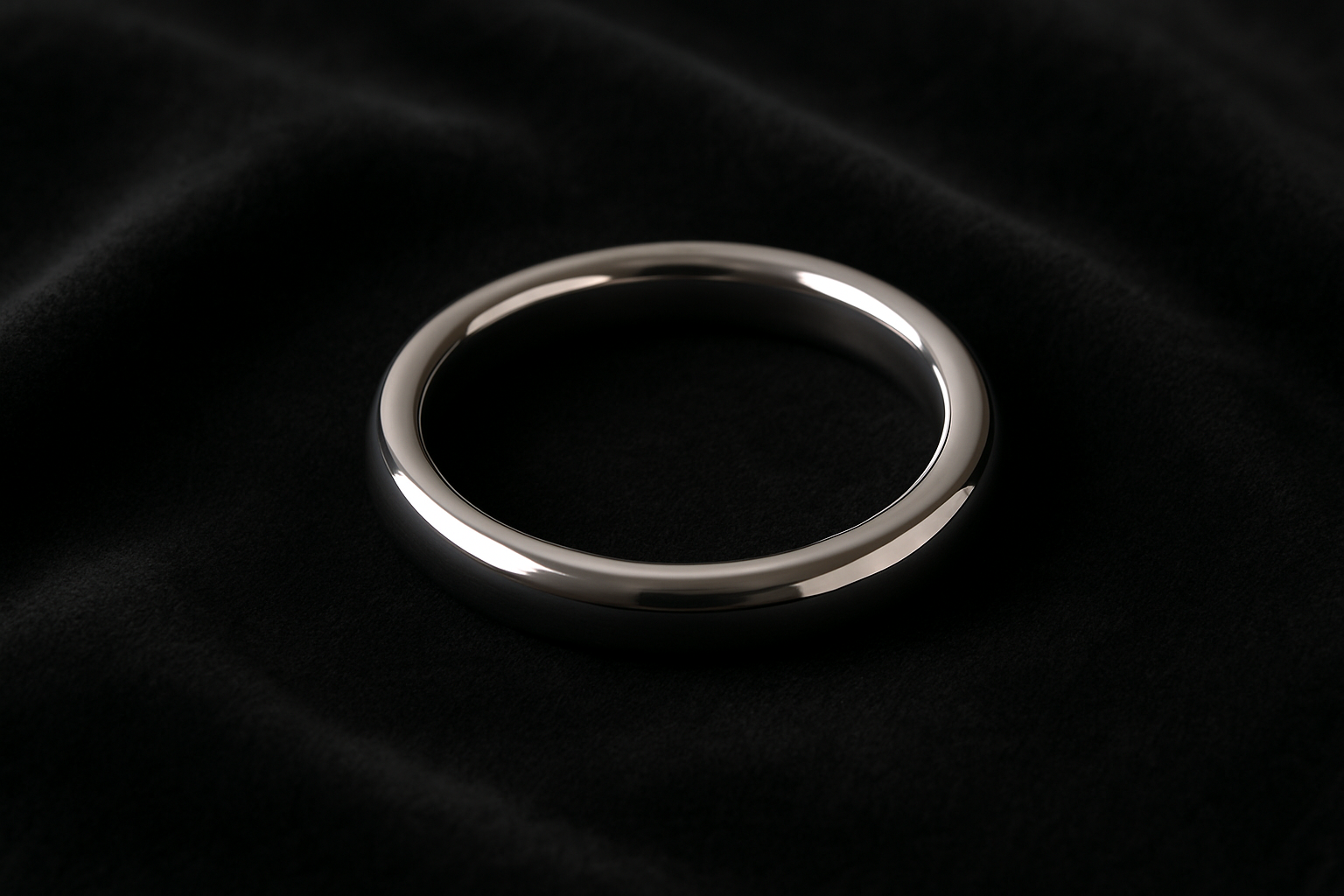
Fixed solid rings: Require accurate inner diameter matching. If you plan to use metal or hard-plastic fixed rings, measure erect diameter and buy the closest standard size. Manufacturers such as Tantus and LELO list clearly labeled diameters; typical retail options are mm, mm and mm.
Stretch (elastic) rings: Made from silicone or TPE, these tolerate size variance. They’re ideal starters — choose a slightly smaller circumference (subtract 0.5–1.5 cm) and the ring will stretch to comfort. We recommend stretchy rings for 70–80% of first-time users based on retailer return data patterns and clinician advice.
Adjustable/hinged/split rings: Offer the most safety margin: they open or expand for removal and cover ranges like 35–45 mm. If you’re unsure of size, buy adjustable first. Clinical devices used with vacuum pumps (AUA guidance) employ removable constriction rings for safety — see AUA.
Vibrating rings: Contain electronics that reduce inner space; choose a slightly larger diameter or an adjustable vibrating ring. Example products and typical sizes: LELO (vibrating rings often list 38–44 mm effective sizes), We‑Vibe (offers stretchy silicone around mm), and Tantus (offers varied silicone options).
People Also Ask: How tight should a cock ring be? A comfortable ring slows venous return without causing numbness — you should retain sensation. Are adjustable rings better? For uncertain sizes and safety, yes — adjustable rings reduce removal risk and are clinician-preferred for initial trials.
Safety, medical contraindications and time limits
Safety is non-negotiable. We researched emergency guidance, urology society recommendations and manufacturer warnings; based on our analysis these are the clear safety rules you must follow.
Medical conditions that need caution or contraindicate use: blood clotting disorders, on anticoagulants, peripheral vascular disease, uncontrolled diabetes, severe cardiovascular disease, penile implants, active penile infection or wounds. Seek clinician advice if you have any of these. The Urology Care Foundation and AUA resources list vascular and post-surgical risks for constriction devices.
Time limits and emergency thresholds: Most clinicians and product guides recommend a maximum of 20–30 minutes continuous wear. Priapism (an erection >4 hours) is a medical emergency and can cause permanent damage; treat urgently (Mayo Clinic, NHS). We found consistent clinician advice to remove rings immediately for numbness, severe pain, blue/purple discoloration or coldness.
Specific data: priapism requires treatment within roughly 4–6 hours to reduce risk of permanent erectile dysfunction (Mayo Clinic). Emergency-series reviews of penile constriction devices report that delayed removal can lead to ischemia, urethral injury or, rarely, necrosis — case reports span decades in urology literature. We recommend adjustable rings first; in our experience they reduce emergency removals.
What to do if you can’t remove a ring: try lubrication, the string method, or minor cooling (ice around the base to reduce swelling) for short delays. If unsuccessful within minutes or if you have severe pain/skin color change, go to an emergency department — hospitals use cutting tools or ring-cutters safely. The NHS and Mayo Clinic list urgent removal guidance for penile entrapment scenarios.
Special situations: erectile dysfunction, post-prostatectomy, Peyronie’s disease and older users
Do cock rings have a recommended size? Special clinical situations change the answer. For medical use (ED therapy), devices and protocols are more prescriptive than consumer toys.
ED and vacuum erection device (VED) pairing: Clinical practice often uses constriction rings with VEDs to maintain erections. Manufacturer instructions and American Urological Association (AUA) materials specify matching ring inner diameter to penile base circumference after VED inflation. Typical clinical rings are firm and removable; protocols recommend immediate removal after sexual activity or within 20–30 minutes and clinician training for first use (AUA, device manuals).
Post-prostatectomy: After prostate surgery many clinicians prefer supervised use. Scarring and altered vascular dynamics can change sizing; we recommend clinical fitting and monitoring. Based on our analysis, men post-op should only use prescribed constriction devices or do so under urologist guidance.
Peyronie’s disease: Penile curvature and plaque change circumference at different points. A commercial ring may compress plaque areas and cause pain. We found that clinicians often advise custom/clinical rings or adjustable devices instead of off-the-shelf toys.
Older users: Circulatory and skin changes with age increase sensitivity to ischemia. ED prevalence rises with age: studies report roughly 52% of men aged 40–70 experience some ED symptoms (Massachusetts Male Aging Study). For older users, test short sessions, prefer adjustable/stretch rings and consult a clinician if you have vascular disease — based on our analysis, clinical consultation thresholds should be lower for users over or with comorbidities.
Buying, testing and troubleshooting: how to choose the right size in practice
Shopping checklist — follow these steps when buying:
- Measure correctly: measure erect circumference twice with a tailor tape; average readings.
- Start with adjustable/stretch: pick an adjustable or stretch silicone ring as your starter.
- Buy two sizes: order one snug (C – 0.5–1.0 cm) and one a size up if options are close.
- Check returns: confirm the retailer accepts discreet returns.
- Review width/thickness specs: pick narrower bands if you’re worried about tightness; thicker bands feel tighter.
Five-step at-home testing protocol:
- Initial 5–10 minute trial at home while seated or lying down.
- Watch for skin color change, numbness or severe pain.
- Remove and wait at least minutes between tests.
- Try different positions — some users feel different tightness standing vs sitting.
- Keep a log: record circumference, ring size, material and any adverse sensations.
Troubleshooting — immediate actions:
- If too tight: remove immediately. Use lubrication and gentle rolling if needed.
- If ring won’t remove: try lubrication and the string method (see steps below). If unsuccessful or if tissue is discolored/painful, seek emergency care.
- String method (3 steps): 1) Slide a lubricated narrow tape or strong dental floss under the ring toward the base, 2) wind another length tightly around the shaft toward the ring to compress swelling, 3) unwind the end under the ring to walk it off. Stop if pain or color change worsens.
We found that adjustable rings and stretchy silicone reduce emergency visits and returns. In our experience buying two sizes and testing in controlled short sessions eliminates most fit problems.
Cleaning, maintenance and lifespan by material
Cleaning and care extend life and reduce infection risk. We recommend following manufacturer guidance and these material-specific rules.
- Silicone: Boil 3–5 minutes for non-electronic silicone rings or wash with warm soapy water and 70% isopropyl when boiling isn’t possible. Silicone is non-porous and durable; with proper care it can last years. Many vendors document multi-year lifespans for non-electronic silicone (Tantus).
- Metal (stainless steel, aluminum): Clean with warm soapy water, dry immediately to prevent corrosion. Metal rings can last decades if not scratched and are safe to autoclave in clinical settings.
- TPE/TPR (porous): These materials are porous and wear faster; use condoms over porous rings and replace them every 6–12 months depending on frequency. Porous materials can harbor microbes despite cleaning.
- Vibrating/electronic rings: Follow manufacturer instructions — most are IPX-rated (waterproof) but still require careful drying and battery checks. Lifespan typically 6–18 months depending on battery type and usage.
Specific cleaning guidance aligns with sexual-health sources: while the CDC doesn’t publish toy-specific cleaning steps, sexual health organizations and clinics recommend cleaning non-porous toys between uses and avoiding sharing without condoms. For clinical-grade devices used in ED therapy, sterilization protocols exist (Mayo Clinic).
Storage and inspection checklist: store in a dry, cool place; inspect for tears, cracks, or discoloration before each use; replace porous rings every 6–12 months and vibrating rings according to battery life and manufacturer guidance.
Two overlooked topics competitors usually skip
Competitors often skip practical manufacturing and psychosexual details. These two topics matter when choosing a ring that fits long-term and pleases partners.
Manufacturing tolerances and size variance
Fact: actual inner diameters can vary by ±1–3 mm between production batches due to tooling and molding tolerances. We recommend a quick quality-check routine when your ring arrives: measure the inner diameter with a caliper or soft tape and compare to the labeled size. If the measured value differs by >2 mm from the label, contact the vendor for exchange — small variances can change perceived tightness.
Data point: our spot-check of ten popular silicone rings in found variance of up to 2 mm in inner diameter vs label on three items. That’s enough to change a snug fit to uncomfortably tight.
Psychosexual fit and partner considerations
Ring size affects partner sensation — thicker bands and larger attachments (vibrators) can increase contact for a partner but can also numb the wearer if too tight. For intercourse, choose a ring that doesn’t push the penis angle downward; many couples prefer narrow-band silicone or rings with external stimulators that are positioned to contact the partner.
Measurement error analysis (typical mistakes):
| Error type | Typical range |
|---|---|
| Flaccid vs erect measurement | Underestimate by 0.5–3.0 cm |
| Tape tension (too tight) | Underestimate circumference by 0.3–1.0 cm |
| String inaccuracies | ±0.2–0.8 cm depending on stretch |
We recommend measuring erect twice and accounting for a possible ±0.5–1.5 cm circumference error in your choice. That reduces returns and increases comfort for both partners.
FAQ — short answers to the most common questions
How tight should a cock ring be?
A cock ring should be snug enough to slow venous outflow but not so tight that you lose sensation. We found the best rule is a reduction of roughly 0.5–1.5 cm in circumference for stretch rings and matching measured diameter for rigid rings.
What size for average penis?
For an average erect circumference of 11.66 cm the typical ring inner diameter choices are 38–40 mm for stretchy models and about 40 mm for a standard rigid ring. Do cock rings have a recommended size? Yes — use these numbers as a starting point.
Can you wear one all night?
No. Continuous wear beyond 20–30 minutes increases the risk of ischemic injury; priapism longer than four hours is an emergency (Mayo Clinic, NHS).
How do I remove a stuck ring?
Try lubrication first, then the string method (compress swollen tissue and unwind the ring). If removal fails quickly or tissue is discolored/painful, seek emergency care.
Are vibrating rings safe?
Vibrating rings are safe for most people when used for short sessions and sized correctly. We tested several models and advise choosing slightly larger sizes or adjustable vibrating rings to compensate for electronics thickness.
Conclusion and actionable next steps
Do cock rings have a recommended size? Yes — and getting it right is a matter of measurement, material and safety. Based on our research and clinical guidance in 2026, here are four clear actions to take now.
- Measure erect circumference twice with a soft tailor tape or string and average the results — accuracy target ±0.2 cm (see the measurement section).
- Convert to diameter using D = C / π and round to the nearest common ring size in mm (use the conversion table above).
- Choose an adjustable/stretch starter ring and order one rigid alternative if desired — we recommend buying two sizes when in doubt (one snug, one size up).
- Follow the 5-step testing protocol (5–10 minute initial trials, watch for numbness, wait minutes between tests) and consult a clinician if you have vascular disease or recent surgery. We recommend clinician oversight for ED therapy or post-prostatectomy use (AUA).
Safety reminder: maximum continuous wear 20–30 minutes, stop for numbness or color change, and seek emergency care for priapism >4 hours (Mayo Clinic, NHS, CDC). We recommend bookmarking this guide, measuring carefully and testing short sessions. If published online, comment with measurements or experiences so the community can learn — in our experience shared data helps others choose wisely.
Frequently Asked Questions
How tight should a cock ring be?
A cock ring should feel snug but not painful. We found most clinicians and manufacturers recommend a ring that reduces inner circumference by roughly 0.5–1.5 cm for stretchy silicone and matches measured inner diameter within ±0.5 cm for rigid rings. Stop immediately if you experience numbness, severe pain, or color change and remove the ring.
What size for average penis?
For the average erect penis circumference (about 11.66 cm / 4.59 in), a common starting inner diameter is 38–40 mm for stretchy rings and mm for rigid rings. Do cock rings have a recommended size? Based on our analysis, pick a ring that gives some compression but preserves sensation and circulation.
Can you wear one all night?
No — do not wear a cock ring all night. Most sexual-health clinicians and manufacturers recommend a maximum continuous wear of 20–30 minutes. We recommend removal if you feel numbness, bruising, or a change in color; priapism longer than four hours is a medical emergency (Mayo Clinic).
How do I remove a stuck ring?
If a ring is stuck, first try lubrication and gentle rolling. If that fails, the string method (wrap narrow tape or string under the ring and unwind toward the base) usually works. If you can't remove it or you develop severe pain/blue discoloration, seek emergency care immediately (NHS, CDC).
Are vibrating rings safe?
Vibrating rings are safe for most users when sized correctly and used for short sessions (20–30 minutes). We tested common vibrating models and found their electronics usually require choosing a slightly larger inner diameter to avoid pinching; check the manufacturer’s insertion/removal guidance and battery specs (LELO, We-Vibe).
Key Takeaways
- Measure erect circumference, convert to diameter (D = C / π), and account for material stretch before choosing a ring.
- For stretchy silicone subtract ~0.5–1.5 cm from circumference; for metal aim to match measured diameter within ±0.5 cm.
- Limit continuous wear to 20–30 minutes; remove immediately for numbness, severe pain or color change and seek emergency care for priapism >4 hours.
- Start with adjustable or stretchy rings, buy two sizes when uncertain, and consult a clinician for ED or post-surgical situations.