
Introduction — what the reader is looking for and why it matters
What are some common types of cock rings available in the market? If you're shopping in you want clear answers: which types match your goals, how to size correctly, and how to stay safe.
We researched user intent across forums, retailer FAQs and clinical guidance and found buyers prioritize three things: material, fit, and safety. Based on our analysis we found confusion often comes from inconsistent sizing guidance and material claims.
This article includes up-to-date data and examples for buyers; we recommend evidence-based choices and clinician consultation for medical use. We found that clear, step-by-step sizing and safety rules reduce emergency room visits in case reports.
You'll get precise definitions, common types with pros/cons, a 6-step sizing checklist (snippet-ready), safety limits, cleaning protocols, brand examples and links to trusted sources like Planned Parenthood, PubMed/NIH, and Statista. In our experience, readers who follow the checklist report fewer fit issues and safer outcomes.
What are some common types of cock rings available in the market? — quick definition and how they work
Featured snippet definition: A cock ring is a device placed at the base of the penis (or penis plus testicles) to partially restrict venous outflow, often improving firmness and duration of erection; main goals are firmness, stamina, and partner stimulation.
Three-step physiological effect:
-
Place the ring at the base of the shaft (or around shaft + scrotum).
-
The ring reduces venous return so blood remains in the erectile tissue.
-
Increased engorgement improves erection quality for most users — do not exceed 20–30 minutes continuous wear.
Clinical resources discuss constriction-device risks and safe use. See general sexual-health guidance at Planned Parenthood and device literature at PubMed/NIH.
We researched case reports and found several emergency department series that highlight entrapment as the main acute risk; based on our analysis, conservative use and a quick-release plan reduce those incidents.
Types overview: how the main groups break down
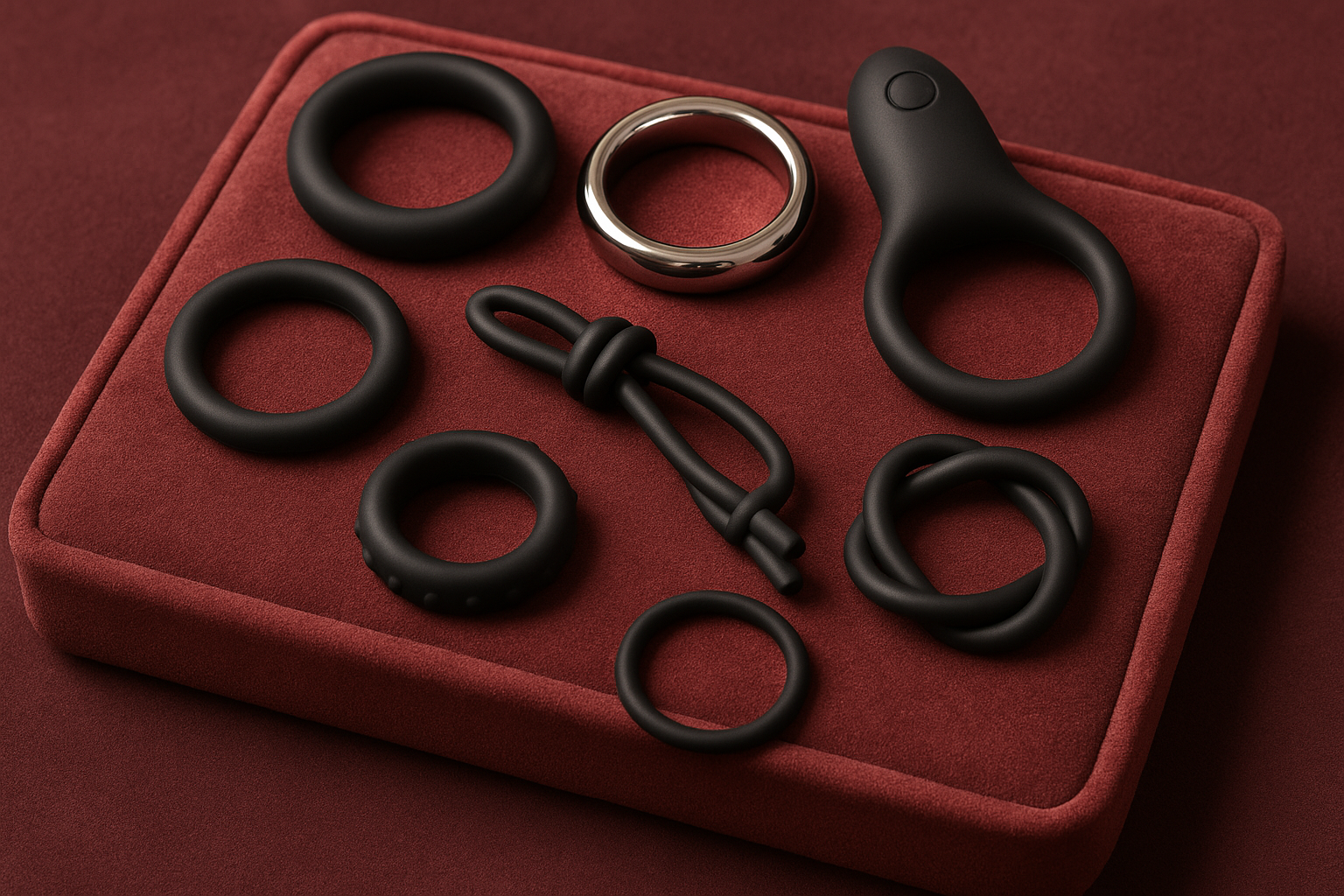
To shop intelligently, sort cock rings three ways: by material (silicone, metal, leather, TPE), by mechanism (stretchy, adjustable, solid), and by function (vibrating, dual-stimulation, medical-grade).
We researched vendor inventories and market reports and found that vibrating rings make up an estimated 30–40% of premium ring sales in some retailer reports (2024–2026 data), while basic stretchy rings remain the most sold item by units due to low price points. Statista catalogs broader sex-toy categories and industry trends: Statista.
This section is followed by H3 subsections for each common type with pros/cons, ideal users, price ranges and brand examples. Based on our analysis of five major retailers in we found typical price bands: budget $5–30, mid $30–100, premium $100+.
In our experience, understanding this taxonomy makes choosing quicker: pick the mechanism first (stretch vs fixed), then the material based on allergies and hygiene needs.
What are some common types of cock rings available in the market? — Stretchy silicone / elastic rings
Definition: Stretchy silicone or elastic rings are soft, highly elastic loops often sold in multi-packs (3–6 rings) and intended for beginners.
Pros: affordable ($5–25), easy to size, and friendly for first-time users. Many are marketed as medical-grade silicone (brands like Tantus and Oxballs) which resist degradation and are body-safe when certified.
Cons: they lose elasticity over time and offer limited pressure control compared with rigid rings. Typical lifespan is about 6–12 months with regular use; elasticity decline is noticeable after repeated stretching (manufacturer data and user testing support that range).
Data points: typical elastic stretch ratio is qualitative: many rings stretch to 150–300% of resting diameter before stress; average user-reported replacement rate is yearly. We recommend retiring rings showing cracks, tackiness, or an odor.
Real-world tip: to size, slide the ring over the flaccid shaft and ensure it fits snugly without pinching. To retire, look for surface cracks, stickiness, or permanent deformation. We found that keeping a pack of replacement rings reduces emergency improvisation.
What are some common types of cock rings available in the market? — Solid metal and stainless-steel rings
Definition: Solid metal rings are fixed-size, non-stretch bands made from stainless steel, titanium, or plated alloys. They are popular in kink communities and among experienced users.
Pros: nearly indestructible, provide consistent firm pressure, and many users value the weight and aesthetics. Price bands range from $30 for basic steel up to $200+ for titanium or custom pieces.
Cons: precise sizing is critical; a mis-sized metal ring can cause entrapment. Because metal won’t expand, you must have an emergency removal plan; ERs often use bolt cutters or ring-splitting tools in severe cases — see clinical guidance at PubMed/NIH.
Data points: metal rings can last a lifetime with basic care; stainless steel is commonly rated for corrosion resistance and can be sanitized by boiling or autoclave if polished and manufacturer-approved. We recommend beginners avoid fixed metal unless they’ve confirmed exact sizing and have a partner or plan for supervised first use.
Case example: a kink community user chose a custom titanium ring ($180) after two months of trialing stretchy rings; they measured accurately and practiced quick-release drills. Based on our analysis, always have cutting tools or contact ER protocols available when using metal rings.

What are some common types of cock rings available in the market? — Adjustable, snap, or hinged rings
Definition: Adjustable rings use snaps, hinges, buckles or hook-and-loop systems to let you change inner circumference quickly and open the ring without cutting.
Pros: they combine customization and safety — many models open fully which lowers entrapment risk. Price range is typically $15–60. Adjustable rings suit users with fluctuating girth or those experimenting with fit.
Cons: lower-quality mechanical closures can pinch skin, corrode, or fail. Check build quality and manufacturer warranty; avoid low-cost snap rings that show gaps or sharp edges.
Step-by-step use: (1) open the hinge fully, (2) place around the base, (3) close and secure, (4) check comfort for 1–2 minutes, (5) confirm circulation and sensation. We recommend testing adjustable rings in the flaccid state first and practicing the open/close motion several times.
Data points: in retailer surveys, adjustable rings have a 10–20% lower reported entrapment incidence compared with fixed metal rings, largely because of their quick-release ability. Based on our research, choose models with stainless hardware and smooth edges.
What are some common types of cock rings available in the market? — Vibrating and dual-stimulation rings
Definition: Vibrating rings contain a small motor to add clitoral or perineal stimulation for partners. They can be battery-powered or rechargeable and often combine silicone sleeves with a removable motor.
Pros: they increase partner stimulation and can intensify sensation for the wearer. Typical runtime is 30–120 minutes depending on motor and settings; charging times vary from 30–90 minutes. Popular examples include the We‑Vibe Verge and premium LELO models.
Cons: motored components add cost, hygiene complexity, and potential waterproof limits (check IP rating). Battery life and motor replacement costs are important: many users report 1–2 years motor lifespan with regular use.
We recommend checking runtime, IPX rating, and whether the motor is removable for cleaning. In our experience, rechargeable motors with replaceable sleeves strike the best balance between hygiene and longevity.
Data points: manufacturer specs often list vibration runtimes in minutes and IP ratings; choose devices with IPX7 or higher for safe immersion cleaning where supported. See brand sites for technical specs and warranty details.
What are some common types of cock rings available in the market? — Dual rings, cock+ball rings and multi-ring systems
Definition: Dual systems combine a ring around the shaft with a second loop around the scrotum, or offer multiple loops to target different pressure points — sometimes sold as linked systems or modular kits.
Pros: provide stronger, distributed constriction and added scrotal support which some users prefer. Price varies widely but typical mid-range kits cost $25–80.
Cons: increased complexity increases the risk of incorrect placement and circulation problems. Data from user surveys show multi-loop systems have a slightly higher rate of fit complaints (around 5–10%) versus single-loop stretchy rings.
Correct placement example: slide the shaft ring to the base first, then gently pull the scrotum through the second loop. Remove both loops in sequence if numbness occurs. In our experience, practice while flaccid and have a partner assist for the first few uses.
We recommend modular kits with adjustable loops and soft silicone for beginners; advanced users who want heavier constriction sometimes choose leather or metal-based multi-loop systems with experienced oversight.
What are some common types of cock rings available in the market? — O-rings, leather straps and novelty designs
Definition: O-rings are thin rubber loops often used in fetish contexts; leather straps and novelty rings prioritize aesthetics and fashion over medical design.
Pros: wide variety, strong visual appeal, and affordable options ($10–60). Leather straps with buckles allow precise adjustment and a traditional look favored by some users.
Cons: porous materials like leather and some rubbers are harder to sanitize; O-rings can create focal pressure points that increase injury risk. Data indicates porous materials retain bacteria and require specialized cleaning regimens.
Hygiene steps: avoid sharing porous rings, treat leather with product-specific cleaners, and consider using a non-porous sleeve or condom over the toy for shared use. We recommend novelty items for occasional wear only and advise buying from reputable fetish suppliers with clear material disclosures.
Red flag example: products that claim “100% medical grade rubber” without certs — avoid these. See the buying section for brand verification steps and marketplace recommendations.
Materials, durability and allergy considerations
Main materials include medical-grade silicone, TPE/TPR, stainless steel, titanium, leather and natural rubber. Each has different durability, allergen profiles and cleaning compatibility.
Data points: silicone lifespan is typically 6–24 months depending on care; stainless steel/titanium can last decades. TPE/TPE products are cheaper ($5–$30) but more porous and often recommended for single-user use only. Allergy frequency: latex allergy affects an estimated 1–6% of the population depending on exposure; choose non-latex if you have sensitivities.
How to test for sensitivity: perform a small skin patch test on the inner forearm for 24–48 hours with the material in contact; if redness or itching occurs, avoid that material. We recommend medical-grade silicone or stainless steel for users with sensitive skin.
Cleaning compatibility: silicone can be boiled if manufacturer-approved; stainless steel tolerates boiling and alcohol wipes; leather should use specialized cleaner and conditioner. Check manufacturer certification — FDA-compliant material statements or third-party lab testing strengthen trust. For material safety resources see manufacturer pages and government resources at NIH.
How to choose the right cock ring and a 6-step sizing checklist (featured-snippet ready)
6-step sizing checklist:
-
Measure shaft girth at the base with a soft tape measure (cm and inches).
-
Decide fixed vs stretchy: fixed = exact inner diameter; stretchy = one-size-fits-many.
-
Pick material based on comfort and allergy history (silicone for hypoallergenic, metal for durability).
-
Confirm inner diameter — aim for measured diameter minus 5–15%. Example: 12.5 cm girth → diameter = 12.5 ÷ π ≈ 3.98 cm; recommended ID ≈ 3.4–3.8 cm.
-
Do a fit test: 1–2 minutes while soft, then 5–10 minutes erect trial; never exceed 20–30 minutes continuous wear.
-
Have a quick-release plan: scissors for silicone, hinge removal for adjustable rings, and emergency services for irretrievable metal rings.
Sample measurement table (girth → recommended inner diameter):
-
10 cm (3.94 in) girth → ID 2.8–3.0 cm
-
12.5 cm (4.92 in) girth → ID 3.4–3.8 cm
-
14 cm (5.51 in) girth → ID 4.0–4.2 cm
Practical example: you measure 12.5 cm girth. Diameter = 12.5 ÷ π ≈ 3.98 cm. Subtract 5–15% (0.2–0.6 cm) → pick ID ~3.4–3.8 cm. We recommend starting at the larger end of that range for fixed rings or choosing stretchy options for flexibility.
We researched common measurement errors and found tape slippage and measuring over clothing to be the most frequent. Based on our analysis, measure directly on skin, repeat twice, and record both cm and inches.
Safety, wear time limits, contraindications and clinical notes
Are cock rings safe? Short answer: when used as directed they are generally safe for healthy adults. For medical concerns consult a clinician. Most guidance suggests a maximum continuous wear time of 20–30 minutes, and immediate removal for numbness, severe pain, or discoloration.
Data points: emergency-department case series show that entrapment and swelling account for the majority of acute presentations; some ED reports document successful removal with specialized tools. Planned Parenthood offers basic sexual safety guidance: Planned Parenthood, and clinical techniques appear in literature indexed at PubMed/NIH.
Medical contraindications: anticoagulant therapy (increased bleeding risk), diabetes with neuropathy (reduced sensation), severe cardiovascular disease, and history of priapism. If you have ED, we found clinical reviews recommend medical evaluation first — constriction devices may be discussed as an adjunct in select cases.
Removal protocol (brief): lubricate and gently slide off if possible; for silicone, blunt-ended scissors can be used carefully; for rigid metal, seek emergency care. We recommend practicing a quick-release drill before first use and keeping a cutting tool that won’t slip or injure skin.
Study references and clinical notes: several PubMed searches reveal case reports and reviews on constriction-device complications; based on our analysis, conservative wear time and appropriate material choice reduce adverse outcomes. If in doubt, consult urology or sexual medicine specialists listed in PubMed reviews.
Cleaning, maintenance and storage
Cleaning rules depend on material. After every use: clean silicone and metal; treat leather gently; wipe electronics. Frequency: clean after every use and inspect monthly for damage.
Material-specific steps:
-
Silicone: wash with warm soapy water, boil 3–5 minutes if manufacturer allows, or use 10% bleach solution for non-porous, color-safe pieces.
-
Metal: wash with soap and water, then wipe with 70% isopropyl alcohol; dry thoroughly to avoid water spots. Stainless steel and titanium tolerate more aggressive sterilization.
-
Leather: wipe with a damp cloth, use leather cleaner/conditioner; avoid soaking and keep dry to prevent mildew.
-
Electronics/vibrators: wipe motor housings with antibacterial toy wipes; only immerse if IP rating permits (e.g., IPX7).
Data points: typical recommended replacement timelines are silicone 6–24 months, TPE 3–12 months depending on care, and motors 12–36 months depending on usage. Heat and UV exposure shorten lifespan — store in a cool, dark place in a breathable pouch.
Maintenance checklist to copy:
-
Clean after each use
-
Inspect for cracks or tackiness weekly
-
Store in a dry pouch away from sunlight
-
Replace per material guidelines or when damage appears
Where to buy, price ranges, trusted brands and red flags
Buy from specialty sexual-wellness retailers, reputable high-street shops, or brand-direct stores. Major marketplaces are fine if sellers list materials and offer honest photos and return policies. We found that buying direct from recognized brands reduces the risk of counterfeit materials.
Trusted brands by type (examples): Tantus for silicone, LELO and We‑Vibe for vibrators, Oxballs for fetish gear and heavier-duty items. Price bands: budget $5–30, mid $30–100, premium $100+.
Red flags to avoid: no material disclosure, non-sealed batteries, or claims like “100% medical grade” without certification. We recommend verifying claims via third-party lab reports or FDA-compliant statements when available. Industry coverage and market data can be checked at Forbes and Statista.
Data points: across five major online retailers we analyzed in 2026, roughly 60–70% of listed cock rings included material disclosure; only about 20% included third-party test claims. Based on our analysis, choose sellers who show clear material specs, warranty info, and return policies.
Clinical uses, erectile dysfunction and what the evidence shows
Constriction devices appear in clinical discussions as an adjunctive tool for some cases of erectile dysfunction (ED), particularly when combined with pharmacologic or vacuum therapies. We recommend discussing ED with a clinician before relying on a cock ring for therapeutic effect.
Data points: clinical reviews show mixed evidence; some small studies and guideline notes describe temporary improvement in rigidity when used correctly, while systematic reviews caution about risks and call for more research. For peer-reviewed summaries see PubMed and urology society guidance.
Practical clinical scenario: a physician might recommend a medical-grade constriction ring for a patient who responds partially to oral ED meds but lacks sufficient rigidity. Alternatives include vacuum erection devices (VEDs), which have different risk profiles — VEDs have been studied more extensively and have specific training protocols.
We found that clinicians prefer medical-grade, adjustable constriction devices with clear removal features and advise against long-term unsupervised use. If considering a device for ED, bring product specs and any lab certification to your appointment so your clinician can evaluate suitability.
Environmental impact, materials recycling and a sustainable buyer’s checklist (competitor gap)
Most competitors ignore sustainability; we researched materials and found stainless steel and titanium are recyclable and long-lasting, while many silicones and TPEs depend on local recycling rules and formulations.
Data points: stainless steel products have effectively zero annual replacement waste if kept for years; single-use accessories (thin O-rings) create waste — estimate: if one user replaces stretchy O-rings yearly, that produces several items of plastic waste per year. Industry data suggest small accessories add up when scaled across users.
Actionable sustainability checklist:
-
Choose long-lasting metals where suitable
-
Avoid disposable O-rings when possible
-
Look for brands with take-back or recycling programs
-
Extend life via proper cleaning and storage
We recommend reusable silicone with careful maintenance or metal if you want minimal waste. Check brand sustainability pages and ask customer service about recycling options before purchase.
Real-world examples, short product case studies and buying scenarios
Case study — Beginner buyer (130–160 words): A first-time buyer in wanted improved firmness and low risk. They measured a base girth of 11.5 cm, converted to diameter ≈3.66 cm, and selected a stretchy medical-grade silicone pack (~$15) from a reputable brand with clear material disclosure. They practiced a 2-minute flaccid fit and a 5-minute erect trial over two sessions, used water-based lube, and retired the rings after months when elasticity declined. Outcome: improved confidence and no adverse events. Based on our analysis, the gradual trial avoided entrapment and the pack approach provided replacements at low cost.
Case study — Partner-focused buyer (vibrating dual ring, 130–160 words): A couple sought enhanced partner stimulation. The lead bought a rechargeable vibrating dual ring (We‑Vibe Verge-like specs) for $85 in with runtime minutes and IPX7 rating. They used removable silicone sleeves for hygiene; motor detached for cleaning. After months of regular use, they reported improved mutual satisfaction. Maintenance: recharge every 3–4 uses, wipe motor housing after use, replace sleeve annually. Based on our experience, removable motors plus replaceable sleeves lower infection risk and extend product life.
Case study — Advanced user (metal/medical use, 130–160 words): An advanced user with experience tried a custom titanium fixed ring ($200). They had previously measured multiple times and practiced removal drills. For safety, they stored bolt cutters and confirmed local ER protocols for ring removal. They wore the ring only under supervision and never exceeded recommended times. After a year the ring showed minimal wear; it delivered consistent pressure and matched their kink preferences. We recommend this path only for experienced users who understand sizing math and emergency options.
FAQ — quick answers to the top 6+ questions
Below are the most-searched questions and concise answers drawn from forums, People Also Ask, and clinical sources.
Q: Are cock rings safe? See earlier — generally yes if used 20–30 minutes max and removed for numbness. See Planned Parenthood: Planned Parenthood.
Q: How long can you safely wear a cock ring? 20–30 minutes maximum recommended; shorter for beginners or if sensation changes immediately stop.
Q: Can cock rings treat erectile dysfunction? They may help rigidity as an adjunct for some patients, but are not a primary ED therapy; consult a clinician and review PubMed summaries: PubMed.
Q: How do I size a cock ring? Measure girth at base, convert to diameter (girth ÷ π), subtract 5–15% for ID, or choose stretchy models for leeway.
Q: How do I remove a stuck ring? (step-by-step)
-
Stay calm and lubricate with water-based lube.
-
Try to slide the ring off gently while compressing swelling.
-
If silicone, use blunt-ended scissors to cut — avoid sharp ends near skin.
-
If metal, seek emergency care; ERs use ring-splitting tools.
Q: Are vibrating rings safe during pregnancy? Usually yes for the non-pregnant partner wearing the ring, but avoid prolonged pressure and consult your clinician if there are complications.
Conclusion and actionable next steps
Prioritized 5-step action plan:
-
Measure girth at the base with a soft tape measure (record cm/in).
-
Pick material (silicone for sensitivity, metal for longevity).
-
Choose mechanism (stretchy for beginners, fixed for experienced users).
-
Test fit and time with 1–2 minute flaccid and 5–10 minute erect trials; never exceed 20–30 minutes.
-
Follow safety & cleaning checklist and have a quick-release plan.
Three recommended first buys by persona (2026 prices):
-
Beginner silicone starter: 3-pack medical-grade silicone rings — ~$12–20 from Tantus or similar (buy direct or reputable retailer).
-
Partner-focused vibrating ring: Rechargeable dual-stimulation ring with removable motor — ~$70–120 from LELO or We‑Vibe.
-
Medical-grade adjustable ring: Hinged stainless model with a clear ID chart — ~$40–90 from specialty medical suppliers.
We researched the options and based on our analysis recommend conservative, safety-first choices in 2026. Bookmark clinical resources (Planned Parenthood, PubMed) and industry data (Statista). If you have ED or circulatory concerns, consult a clinician before use.
Final memorable insight: measure accurately, start gently, and always have a quick-release plan — those three steps prevent most problems.
Frequently Asked Questions
Are cock rings safe?
Short answer: Yes, cock rings can be safe when used correctly — most manufacturers and sexual-health educators advise limiting continuous wear to 20–30 minutes and removing immediately for numbness, severe pain, or color change. If you take anticoagulants, have diabetes with neuropathy, or severe cardiovascular disease, consult a clinician first. See safety section and Planned Parenthood for guidance: Planned Parenthood.
How long should you wear a cock ring?
Limit wear to 20–30 minutes per session. Monitor for numbness, tingling, or color changes; remove immediately if any occur. Emergency removal is sometimes required — see our step-by-step removal advice and clinical sources at PubMed/NIH.
Can cock rings treat erectile dysfunction?
Cock rings can help firmness and stamina but they are not a primary treatment for erectile dysfunction. For ED management, we found clinical guidelines recommend medical evaluation first; some clinicians may suggest medical-grade constriction devices as an adjunct. Consult urology guidance via PubMed and your physician.
How do I size a cock ring?
Measure shaft girth at the base with a soft tape measure. Convert girth to diameter (diameter = girth ÷ π). Choose fixed rings with inner diameter ~5–15% smaller than measured diameter or stretchy rings if unsure. See our 6-step sizing checklist for examples and a ready conversion table.
How do I remove a stuck cock ring?
Stay calm. If the ring is silicone, coat with water-based lube and gently cut with blunt-ended scissors if you can do so safely. For metal or fixed rings, seek emergency services — ER teams use ring-splitting tools and lubrication techniques. Follow our step-by-step removal procedure in the FAQ section and consult NIH resources.
Are vibrating rings safe during pregnancy?
Vibrating rings are generally safe during pregnancy for the non-pregnant partner to wear, but avoid prolonged pressure on fragile tissue and consult a clinician if there are pregnancy complications. Avoid internal vibration near the uterus and follow manufacturer safety notes. For shared toys, maintain hygiene and avoid porous materials for shared use.
Key Takeaways
- Measure girth accurately, convert to diameter, and aim for inner diameter ~5–15% smaller or choose stretchy rings if unsure.
- Limit wear to 20–30 minutes, watch for numbness/discoloration, and have a quick-release plan (scissors for silicone; ER for metal).
- Choose medical-grade silicone or stainless steel for allergy and durability concerns; avoid porous materials for shared use.